
最新消息
2024.03.01
Dangerous Goods Classification and Hazard Labels
Dangerous Goods Classification and Hazard Labels
Understanding UN Numbers (United Nations Numbers)
The United Nations Number (UN Number) is a standardized coding system established by the United Nations for the transport of dangerous goods worldwide. It is used to identify and classify different types of hazardous substances.
1. Structure of the UN Number
- Each UN Number consists of four digits (for example, UN1203 for gasoline).
- Each number corresponds to a specific dangerous substance or a group of substances with similar hazardous properties.
2. Internationally recognized standard
- UN Numbers are globally accepted, and are used across sea, air, road, and rail transport.
- This ensures consistency in the identification and management of dangerous goods around the world.
3. Classification purpose
- Dangerous goods are divided into nine major classes (such as flammable liquids, corrosive substances, etc.).
- Each class is associated with relevant UN Numbers, helping operators quickly recognize and manage the type of hazard involved.
4. Labels and documentation
- All dangerous goods must display the correct UN Number during transport.
- They must also be accompanied by proper shipping documents, ensuring safety and compliance with applicable regulations.
5. Importance for safety management
- UN Numbers help clearly identify the hazard characteristics of each cargo.
- This supports the development of emergency response plans and enhances safety during transport, handling, and storage.
WuSin Transportations Co., LTD. follows UN Number standards in its dangerous goods operations to ensure that every shipment is handled safely, compliantly, and reliably.
UN Dangerous Goods Classes and Hazard Labels
Based on the UN Recommendations on the Transport of Dangerous Goods, dangerous goods are classified into nine classes.
The purpose of this system is to standardize labeling and hazard communication, making dangerous goods transport safer and more manageable.
■ Class 1 – Explosives
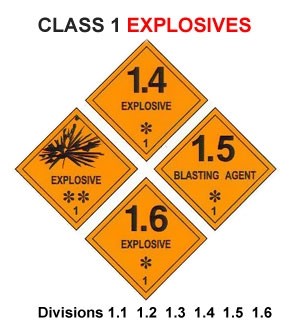
<Label for Class 1 Dangerous Goods>
Description – Class 1 Explosives include substances and articles such as:
- Those that present a mass explosion hazard
- Those that present a projection hazard without a mass explosion
- Those that present a fire hazard with minor blast or projection risk but no mass explosion
- Substances and articles that present no significant hazard
- Very insensitive substances with a potential for mass explosion under certain conditions
- Extremely insensitive articles that do not present a mass explosion hazard
■ Class 2 – Gases
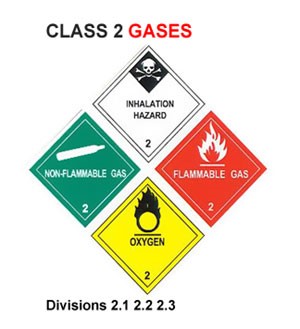
<Label for Class 2 Dangerous Goods>
Description – Class 2 Gases include:
- Flammable gases
- Non-flammable, non-toxic gases
- Toxic gases
■ Class 3 – Flammable Liquids
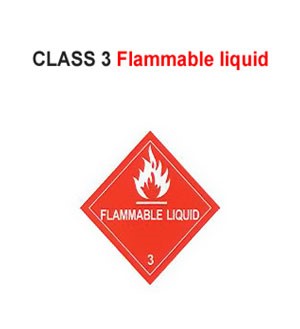
<Label for Class 3 Dangerous Goods>
Description – Class 3 Flammable Liquids are categorized into packing groups according to flash point, initial boiling point, and sometimes viscosity:
- Initial boiling point below 35°C → Packing Group I (high danger)
- Closed-cup flash point below 23°C, or initial boiling point above 35°C → Packing Group II (medium danger)
- Closed-cup flash point 23–60°C, and initial boiling point above 35°C → Packing Group III (low danger)
■ Class 4 – Flammable Solids; Substances Liable to Spontaneous Combustion; Substances Which, in Contact with Water, Emit Flammable Gases
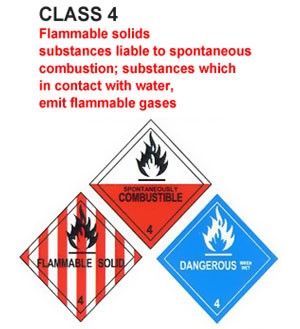
<Label for Class 4 Dangerous Goods>
Description – Class 4 includes:
- Flammable solids
- Spontaneously combustible substances
- Substances which are dangerous when wet (react with water to release flammable gases)
■ Class 5 – Oxidizing Substances and Organic Peroxides
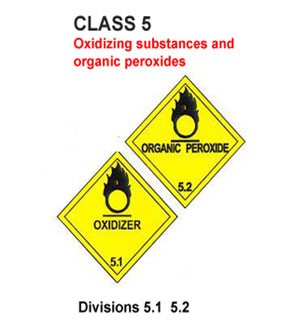
<Label for Class 5 Dangerous Goods>
Description – Class 5 includes:
- Oxidizing substances – materials that can cause or contribute to the combustion of other materials
- Organic peroxides – thermally unstable substances that may undergo exothermic decomposition, sometimes with explosion, fire, or toxic emission risks
■ Class 6 – Toxic and Infectious Substances
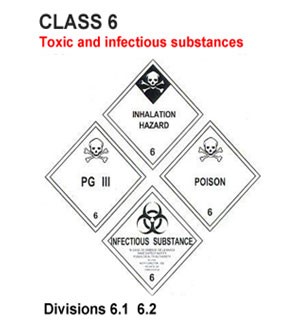
<Label for Class 6 Dangerous Goods>
Description – Class 6 includes:
- Toxic substances – materials that may cause serious health effects or death if inhaled, ingested, or absorbed through the skin
- Infectious substances – materials containing pathogens that can cause disease in humans or animals
■ Class 7 – Radioactive Material
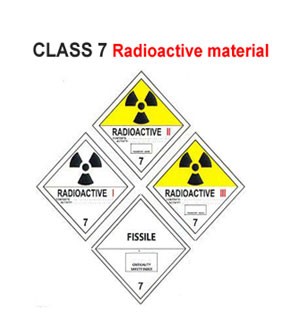
<Label for Class 7 Dangerous Goods>
Description – Class 7 includes:
- Substances that emit ionizing radiation as a result of spontaneous nuclear transformations, and which require special handling and shielding to protect people and the environment
■ Class 8 – Corrosive Substances
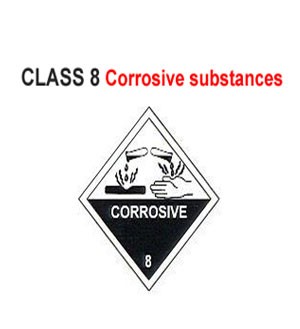
<Label for Class 8 Dangerous Goods>
Description – Class 8 includes:
- Solid or liquid substances that, in their original state, can cause severe damage to living tissue or corrode metals and other materials by chemical action
■ Class 9 – Miscellaneous Dangerous Substances and Articles
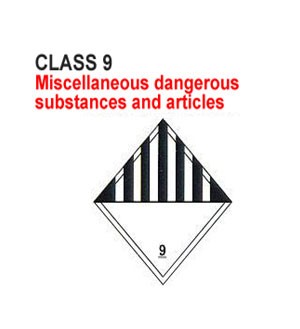
<Label for Class 9 Dangerous Goods>
Description – Class 9 includes:
- Substances and articles that present other types of hazards not covered by Classes 1–8, but which experience or testing has shown to be dangerous for transport
- This may include materials subject to provisions under the SOLAS Convention and the MARPOL 73/78 Convention (Annex III) relating to the prevention of marine pollution by harmful substances carried at sea
WuSin Transportations Co., LTD. provides the following container transport services:
- Standard dry container transport
- Reefer (refrigerated) container transport
- Dangerous goods container transport
- ISO tank container transport
- Tank container transport
- 20-foot dry container transport
Related FAQs – WuSin Transportations Co., LTD.
- What Is the Difference Between 40-Foot and 20-Foot Containers?
- Common Shipping Terms and Abbreviations in English and Chinese
- Key Safety Considerations and Characteristics of Dangerous Goods Transportation
- What Is Dangerous Goods Transportation?
- What Is the Container Loading and Unloading Process?
- What Is TEU? The Meaning of Twenty-foot Equivalent Unit in Container Shipping